Practical guides for learning together
Choose by the need in front of you. Every guide includes context, concrete examples, a small practice, reflection prompts, and reminders about safety or flexibility where they matter.

 Rhythm · 8 min
A Gentle Weekly Learning Rhythm
Build a flexible pattern around opening, active learning, and reflection—then learn how to restart after disruption.
Read the guide → Reading · 9 min
Better Questions After Reading
Invite interpretation, evidence, imagination, and connection without making every conversation feel like a test.
Read the guide →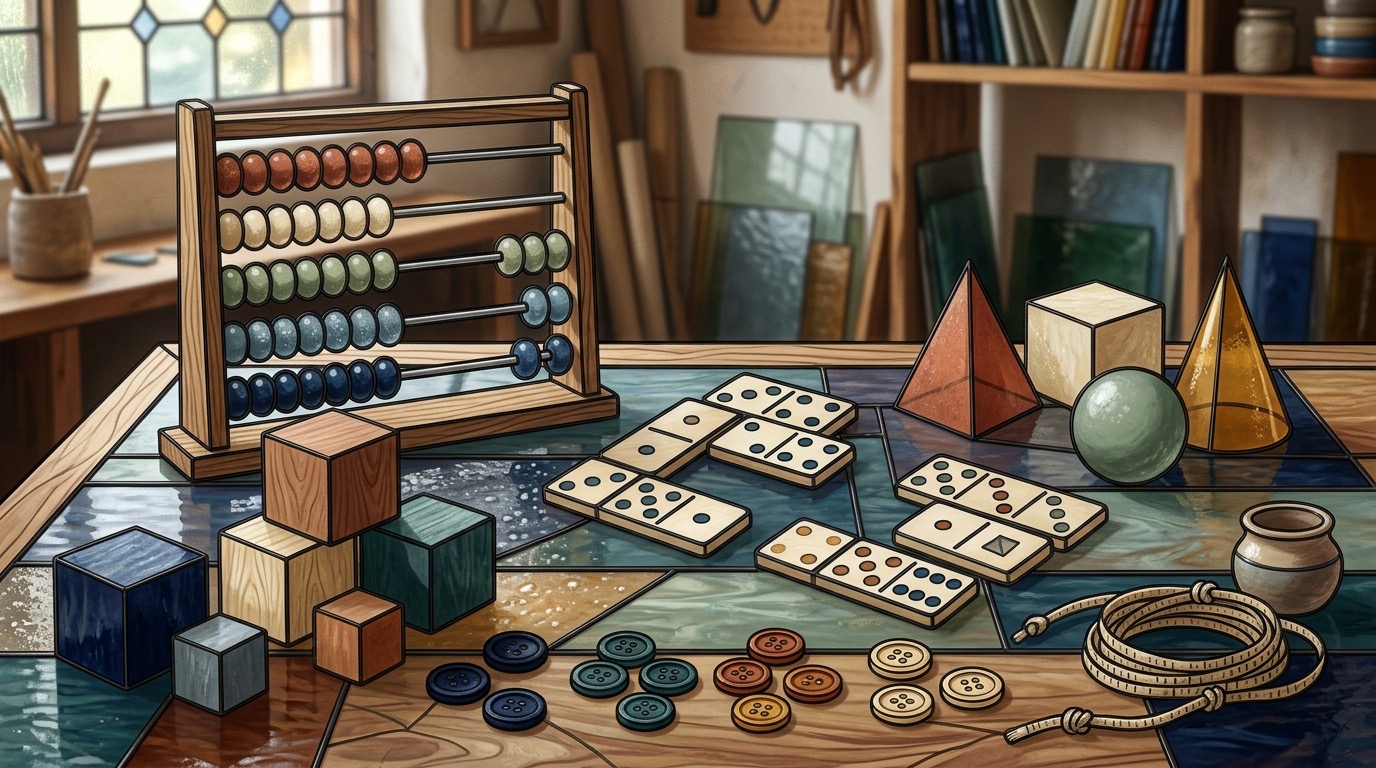 Numbers · 8 min
Everyday Number Sense
Make quantity, comparison, estimation, patterns, and explanation visible in ordinary household moments.
Read the guide → Observation · 8 min
A Family Observation Journal
Develop careful noticing through sketches, comparisons, questions, and repeated visits to familiar places.
Read the guide → Character · 9 min
Character Conversations Without Lecturing
Discuss choices, impact, repair, courage, honesty, and responsibility while protecting connection.
Read the guide → Life skills · 8 min
Life Skills Through Small Routines
Teach a real task through demonstration, shared practice, simple standards, and gradual release.
Read the guide → Connection · 7 min
A Meaningful Family Table Conversation
Use short, pressure-free prompts and listening habits around any shared snack or meal.
Read the guide → Focus · 8 min
A Calm Focus Corner
Create an inviting place for regulation and attention without turning it into isolation or punishment.
Read the guide → Creativity · 8 min
Creative Arts Without Perfection Pressure
Offer invitations that value experimentation, choice, revision, and the learner’s own visual decisions.
Read the guide → Science · 9 min
Outdoor Science in Ordinary Places
Turn repeated neighborhood observations into questions, records, comparisons, and responsible care.
Read the guide → Books · 8 min
Building a Small Home Library
Prioritize access, variety, rotation, and ownership of choices instead of collecting the most books.
Read the guide → Service · 9 min
Family Service and Everyday Kindness
Choose small acts that respect dignity, meet a real need, and leave room for honest reflection.
Read the guide →Begin with friction, curiosity, or joy
If the week feels difficult, choose a guide that lowers friction. If a learner is already curious, choose a guide that helps you follow the question. If your family needs connection, begin with something enjoyable enough to repeat.
A note about age ranges
The journal avoids rigid age labels because language, independence, sensory needs, interests, and family context vary. Adults should simplify or deepen each practice, supervise tools and outdoor activity, and stop when a learner shows distress or fatigue.