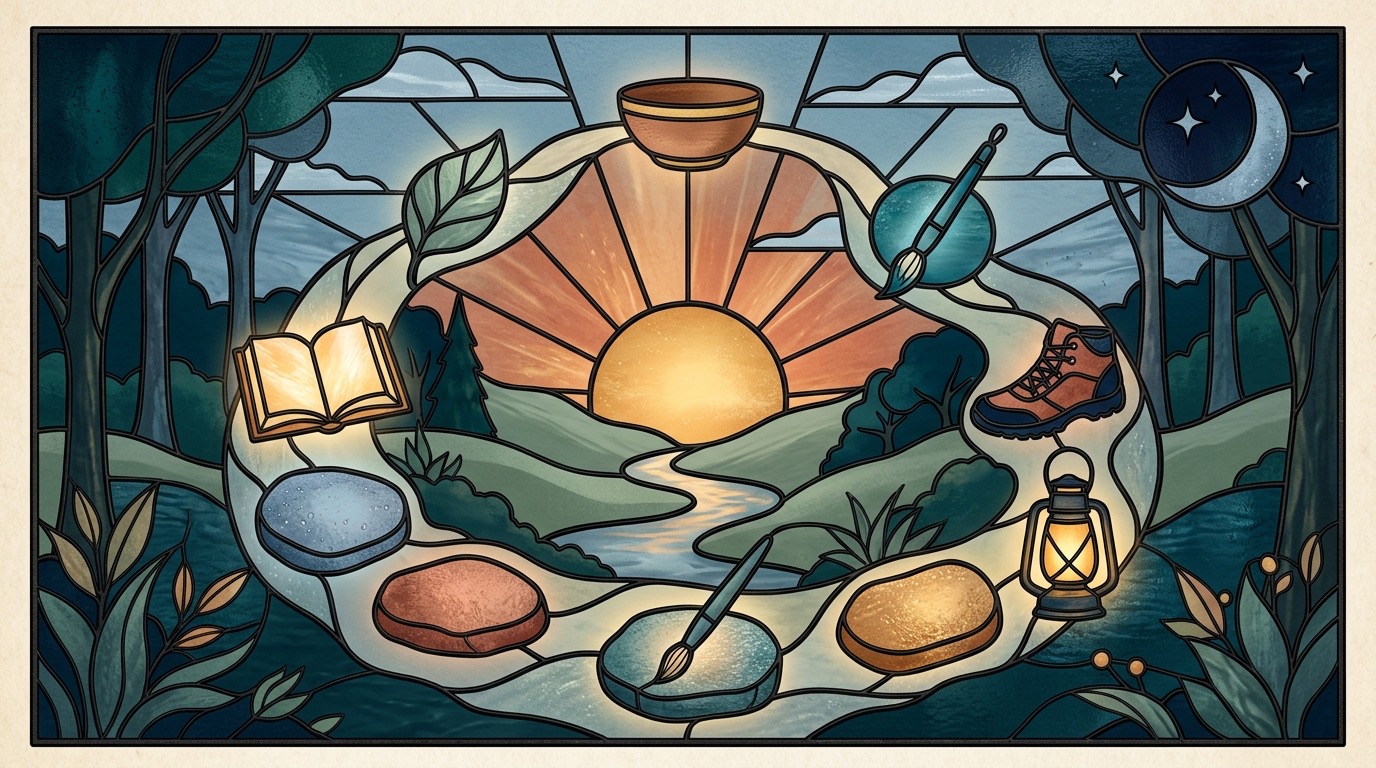
Families often reach for a detailed schedule when learning feels scattered. The schedule may look reassuring on paper, but it can become another source of strain when appointments, low-energy mornings, work demands, or unexpected needs arrive. A gentler rhythm starts with fewer promises and clearer transitions.
Begin with three anchors
An anchor is a moment that tells everyone what kind of time is beginning or ending. It does not have to happen at the same minute each day. For many households, three anchors are enough:
- An opening anchor gathers attention. Open the curtains, fill water bottles, read a short passage, review the plan, or light a battery lantern.
- An active anchor marks the main effort. This may be focused reading, a practical task, a creative project, outside observation, or a conversation built around one question.
- A closing anchor helps the mind release the work. Put materials away, name one thing learned, write tomorrow’s first step, or take a brief walk.
The power comes from recognition. When the same small action regularly opens or closes learning time, adults need fewer repeated instructions and learners spend less energy guessing what comes next.
Try this: the ten-minute plan
On one sheet of paper, write only three lines: “We begin with…,” “Our main effort is…,” and “We close by….” Keep every line brief enough to remember. Try that shape for three days before adding anything.
Give different days different jobs
A weekly rhythm can reduce the pressure to do every kind of learning every day. One possible pattern is to explore at the start of the week, practice something familiar the next day, make or build in the middle, connect learning to ordinary life later, and reflect before the weekend. These are roles, not mandatory labels.
For example, an “explore” day might introduce a story, object, question, or walk. A “practice” day could revisit a small skill in two short rounds. A “create” day might use drawing, construction, cooking, music, or writing. A “connect” day brings the idea into errands or household responsibilities. A “reflect” day gathers loose pages, notices growth, and chooses what is worth continuing.
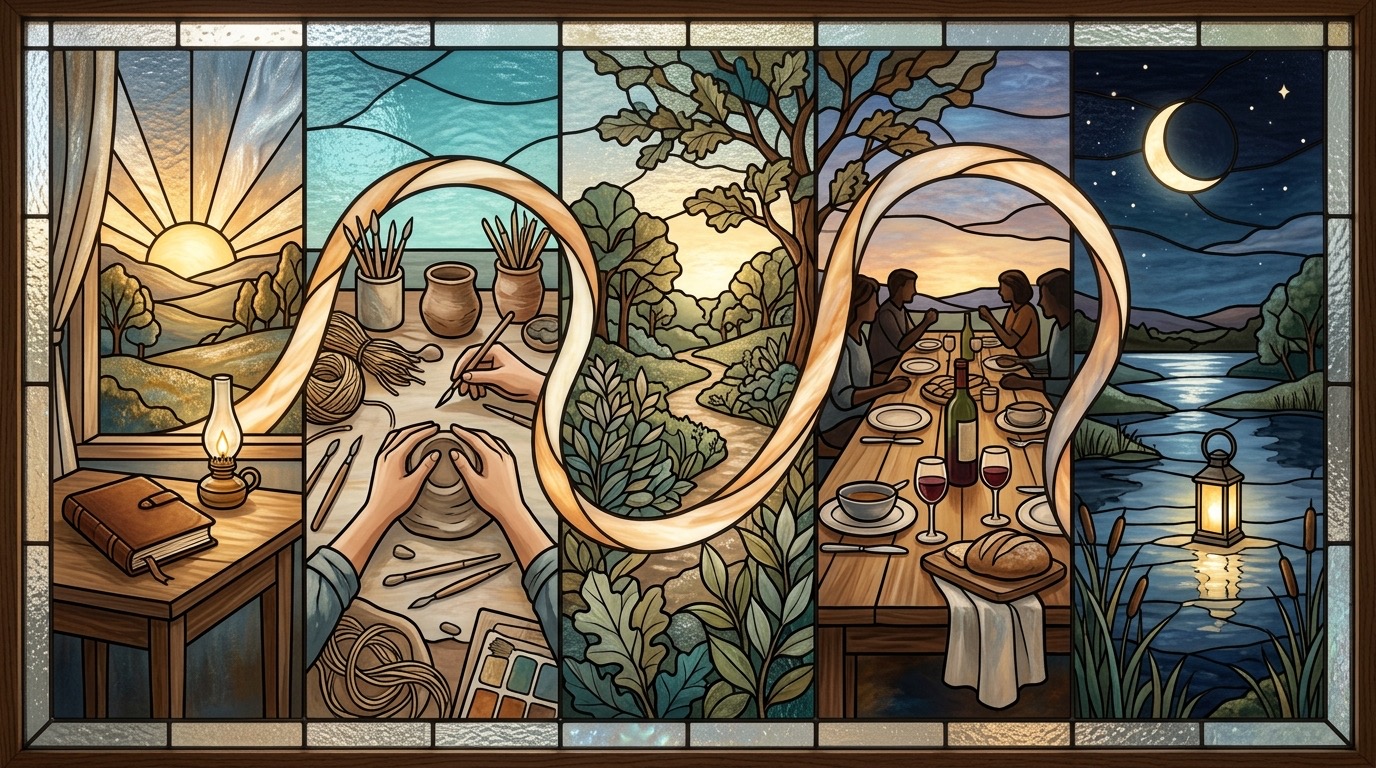
Plan for energy, not only time
Two thirty-minute blocks can feel completely different depending on sleep, hunger, noise, uncertainty, or how much self-control the previous task required. Instead of asking only, “How much time do we have?” also ask, “What kind of energy is available?”
- Use higher-energy windows for new or demanding work.
- Use lower-energy windows for listening, sorting, reviewing, drawing, or familiar routines.
- Place movement before a task that requires sitting, not only after attention has already broken down.
- Keep an easier alternate activity ready. Changing the method is not the same as abandoning the goal.
Make restarting part of the rhythm
A rhythm is tested by interruption. When a day goes off course, avoid squeezing every missed item into the remaining hours. Choose one closing action, name the next starting point, and let the rest go. This protects tomorrow from today’s backlog.
A simple restart sentence can help: “Today changed. We will close by putting these materials together, and tomorrow we will begin with the blue book.” The language is factual, not ashamed. It teaches that plans are tools and that returning matters more than preserving a perfect streak.
Questions for the adult
- Which transition currently creates the most confusion?
- What opening action already happens naturally in our home?
- What could we remove before adding anything new?
- How will we recognize that a learner needs movement, food, quiet, or a shorter task?
What success looks like
Success is not completing a color-coded plan. Look for less negotiation at the beginning, clearer endings, materials that are easier to find, and a learner who can describe what comes next. A good rhythm leaves enough life around the learning for conversation, care, play, and recovery.