Perfection pressure often enters art through a helpful adult: fixing proportions, choosing colors, drawing the difficult part, or displaying only the most recognizable result. A process-centered practice protects the learner’s decisions while still teaching safe and effective use of materials.
Offer an invitation instead of a model to copy
An invitation names a possibility: make marks that sound like rain, build a shelter for a tiny object, mix three colors inspired by sunset, or create a picture using only torn shapes. The adult may demonstrate a technique on separate material, but does not supply the final composition.
A model can be useful when the goal is learning a specific construction method. Be clear about that purpose and leave later opportunities for personal choices. When every project begins with an adult example, learners often spend more energy matching it than observing what their own materials can do.
Use fewer materials with more intention
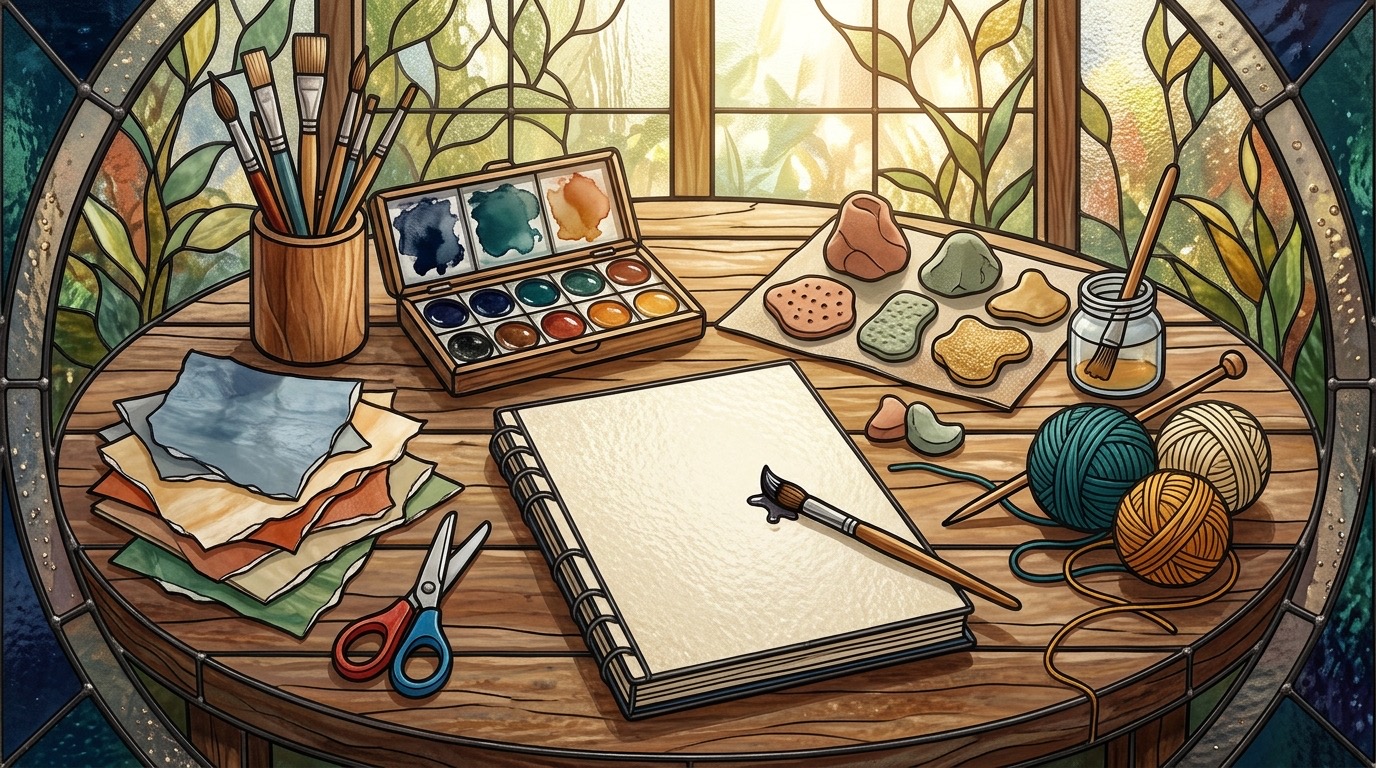
A table overflowing with options can be exciting or overwhelming. Begin with one base material, one joining or mark-making tool, and a limited palette. Add choices when the learner has explored what is present. Reusing familiar materials also supports deeper experimentation.
- Paper, a dark pencil, and two colored pencils
- Cardboard pieces, masking tape, and yarn
- Washable paint in two colors plus white
- Clay with one texture tool and found safe objects
- Scrap paper, safe scissors, and glue applied with a brush
Try this: one material, three actions
Choose paper and invite three actions: fold, tear, and layer. Or choose clay and invite roll, press, and connect. The constraint creates a starting point while the order, subject, scale, and result remain open.
Respond to decisions, not only appearance
“Beautiful” is kind but gives little information. Notice what the learner actually did: “You repeated that curved line,” “The paper stands because you folded the base,” or “You covered the first color and then scratched through it.” Ask questions only when you are genuinely curious.
Avoid asking “What is it?” as the automatic first response. Some work is abstract, exploratory, or unfinished. Try “Tell me about what was happening here,” or simply wait for the learner to offer a description.

Allow revision and dismantling
Adults may become attached to a child’s creation before the child does. Ask before displaying, photographing, labeling, or saving work. A learner may want to paint over a favorite section, take a sculpture apart, or use yesterday’s drawing as collage material. Those choices are part of authorship.
If storage is limited, choose a review day. The learner can keep a few pieces, photograph others without identifying information, reuse materials, and let some work go. This teaches curation without treating every product as permanent.
Separate skill instruction from takeover
Teach how to rinse a brush, join two pieces, control glue, use scissors, or protect the surface. Then step back. If frustration appears, ask whether the learner wants a demonstration, a steadier material, help holding one part, or time to solve it independently.
Material safety
Choose age-appropriate, non-toxic supplies and supervise scissors, cutting tools, adhesives, small parts, heat, and anything that may be swallowed or inhaled. Check allergies and ventilation. Art materials should not be used on skin or food surfaces unless specifically made for that purpose.
Notice creative habits
Growth may appear as staying with a problem, trying a second connection, mixing intentionally, using an accidental mark, explaining a choice, caring for tools, or beginning without waiting for an example. These habits can be named without ranking the final picture.
Questions that preserve ownership
- Which part did you decide first?
- What did the material do that surprised you?
- Is there anything you want to change or leave unfinished?
- Would you like this displayed, stored, reused, or kept private?