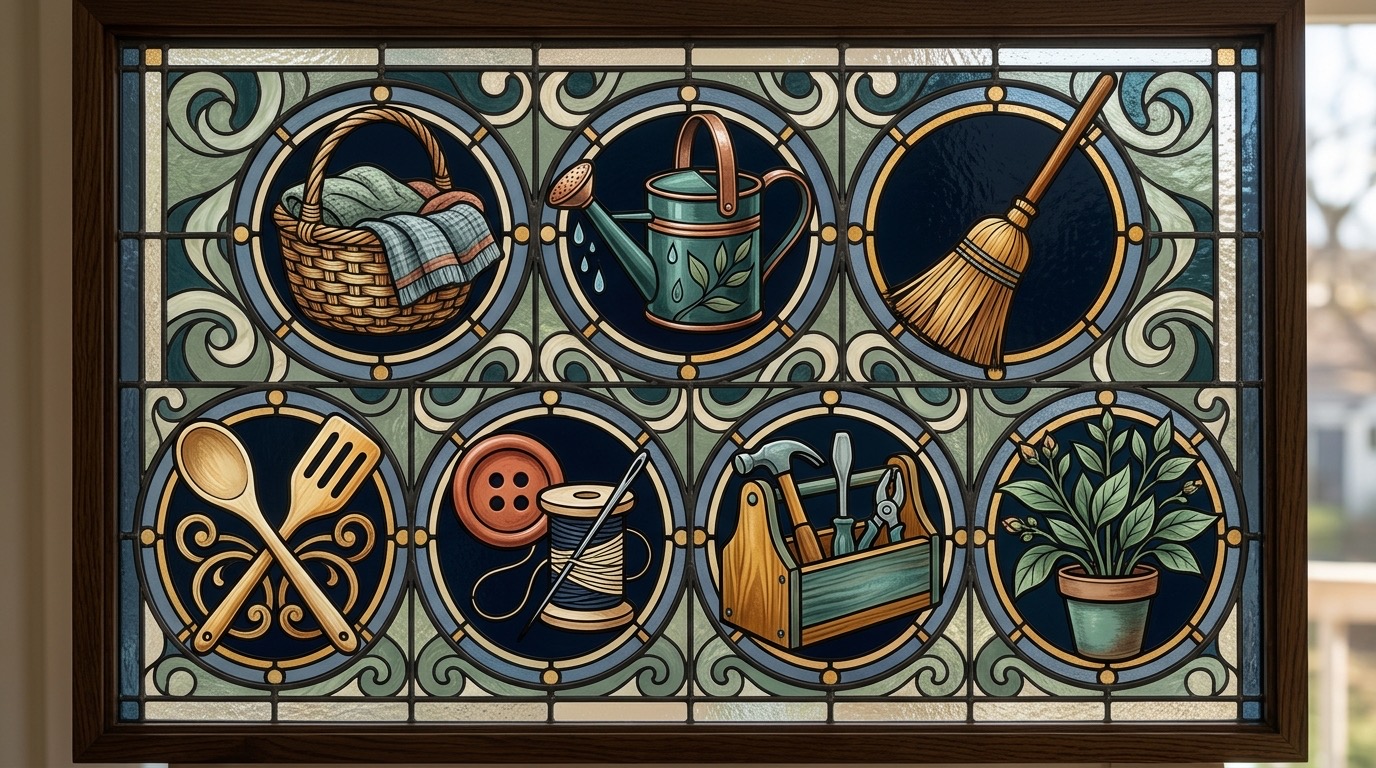
A household task can communicate more than “help the adult.” It can show that each person has knowledge to build, a contribution to make, and a shared environment worthy of care.
Choose one real task with a clear finish
Start with a task that matters and can be completed in a reasonable time: matching clean socks, watering one plant, setting out napkins, wiping a safe surface, sorting recycling, packing a familiar activity bag, or returning books to a shelf. A vague direction such as “clean your room” contains many hidden decisions. A clear task shows where to begin and how to know it is done.
Choose without assigning skills by gender or comparing family members. Consider reach, strength, coordination, attention, sensory needs, and previous experience. Adults remain responsible for chemicals, heat, sharp tools, heavy objects, traffic, food safety, and any other hazards.
Make invisible steps visible
Experts compress actions. An adult may “wipe the table” without consciously noticing the sequence: clear objects, check for spills, prepare the cloth, wipe from one side, inspect sticky areas, rinse or place the cloth correctly, and return items. A new learner sees only the instruction.
Demonstrate slowly without overexplaining. Name the few decisions that matter. A photo sequence or object arrangement can help, but keep it simple enough to consult during the task.
Try this: I do, we do, you do, we review
First demonstrate one small task. Next complete it together, with the learner doing a meaningful part. Then let the learner try while you stay available. Finally, review the result together using the same clear standard.
Define “done enough” before practice
Perfection makes independence impossible because the adult silently corrects everything afterward. Decide which parts are essential. For setting a table, the essential standard may be one place setting for each person and safe placement away from edges. Exact symmetry may not matter.
State the standard in observable language. “The books are upright or safely stacked, and none block the walkway” is clearer than “Make it nice.” Standards can become more precise as skill grows.
Coach less as skill grows
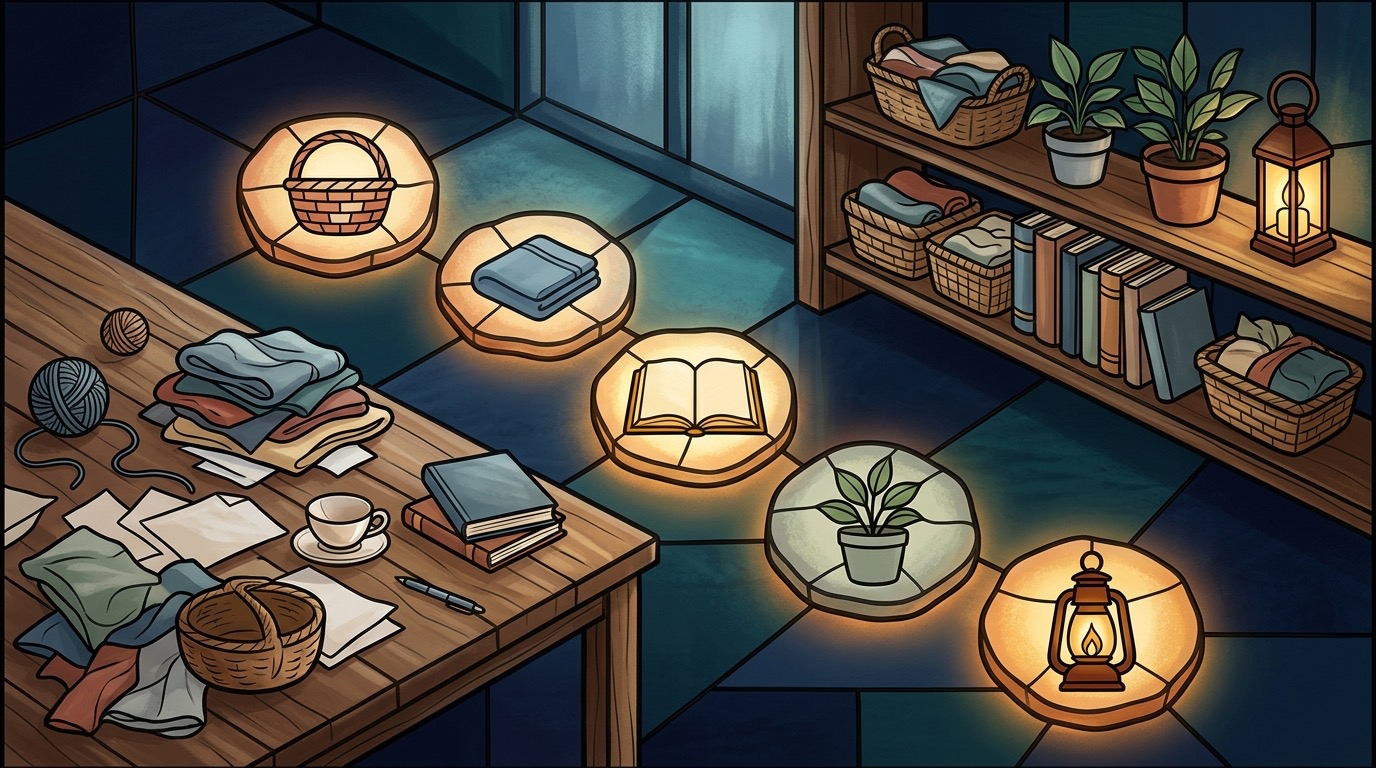
Too many reminders can make the adult part of the task. Replace repeated verbal prompting with one stable cue: a basket placed by the door, a short checklist, a consistent storage location, or a phrase such as “check the finish.” Wait long enough for the learner to notice and act.
If the task repeatedly fails, adjust the environment before assuming poor motivation. Supplies may be hard to reach, the sequence may be too long, the timing may be difficult, or the learner may not understand the quality standard.
Use feedback that teaches the next attempt
- Describe what worked: “Every item returned to its labeled basket.”
- Name one next step: “Water remained under the pot; next time we will use a smaller pour.”
- Ask for self-checking: “What part looks finished to you?”
- Thank real contribution without turning every task into a reward transaction.
- Repeat the task soon enough for memory to support improvement.
Safety boundary
Adults must assess and supervise each task. Keep medicines, cleaners, flames, appliances, blades, power tools, choking hazards, and heavy or unstable objects outside a learner’s independent access unless a responsible adult has deliberately established safe use.
Connect skill with belonging
Life skills are not punishment for unfinished academic work. They are part of participating in a household and caring for people and places. Rotate roles when possible, respect disability-related needs, and make rest part of responsible living too. The goal is a learner who can increasingly notice what is needed, begin with confidence, and ask for help without shame.